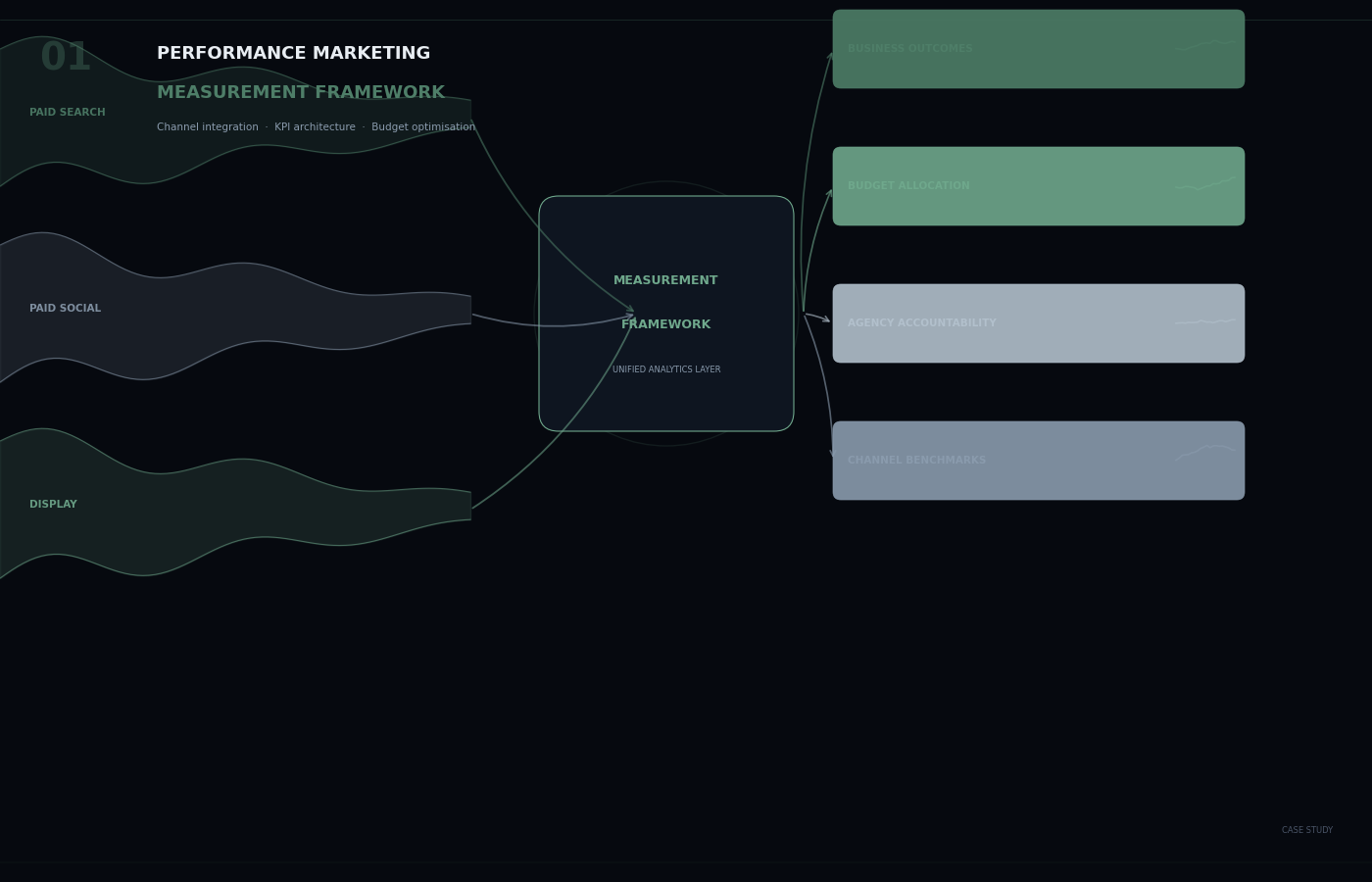
A major brand had significant performance marketing investment across paid search, paid social, and digital channels — but no coherent way of understanding what was actually working. Each channel reported its own metrics in its own language. Budget decisions were being made on volume and cost indicators rather than contribution to real business outcomes.
Developed an integrated measurement framework that brought paid search, paid social, and display into a single, comparable performance view for the first time. Defined the KPI architecture — distinguishing between channel-level efficiency metrics and business-level effectiveness metrics, and mapping how one leads to the other. Worked with the analytics team to implement the data infrastructure and built the reporting model the planning team used for allocation decisions going forward.
Budget allocation moved from being based on volume metrics to contribution to business outcomes. The client had a consistent basis for comparing performance across channels and holding the agency accountable against meaningful targets. The framework became the standard for the client's broader digital planning.
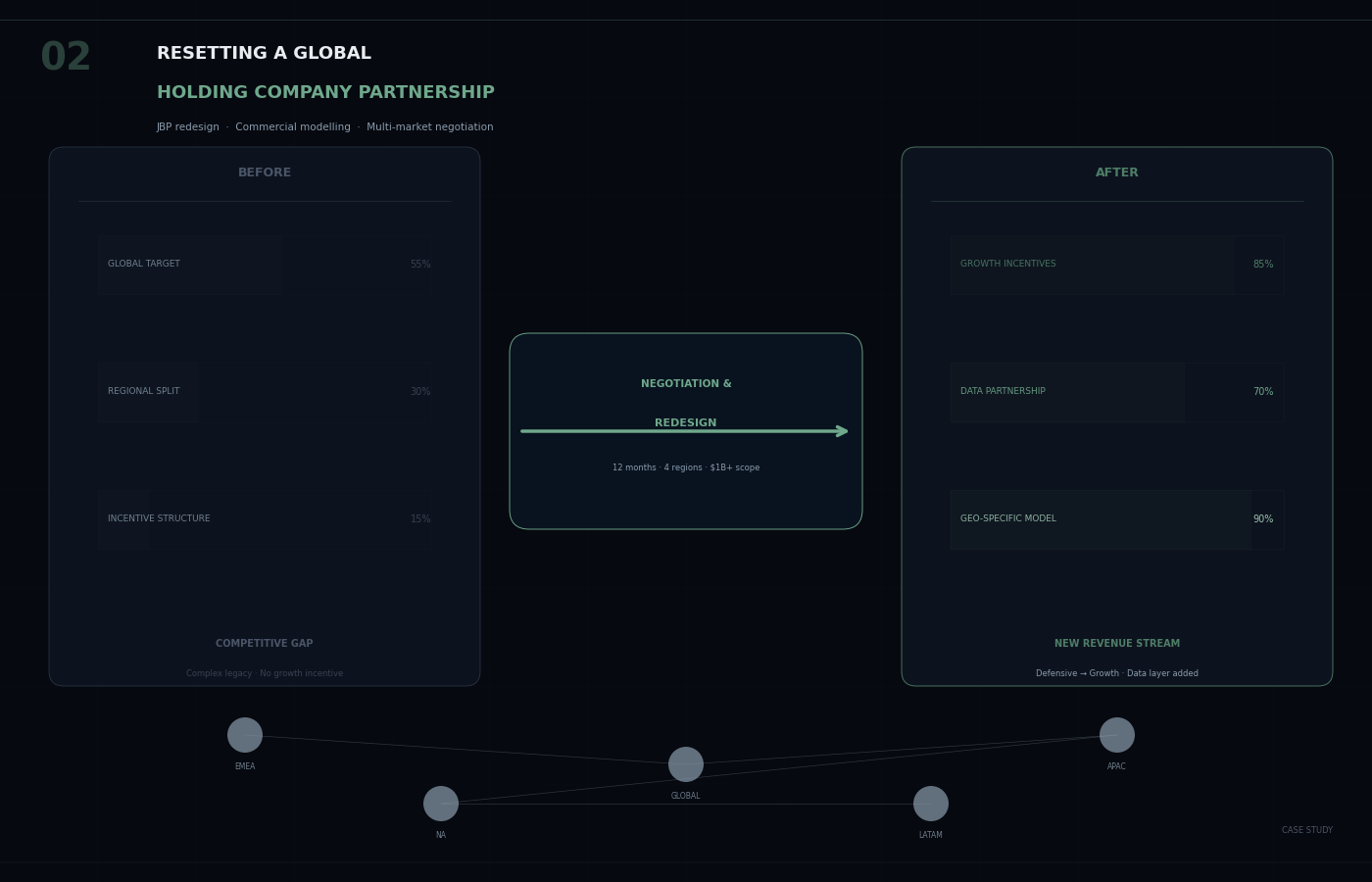
A technology platform had a major agency holding company relationship that had been running for years — with history, complexity, and a commercial structure that was no longer competitive. There was a formal brief to respond to, a tight timeline, and significant internal misalignment about what the platform could and should offer across multiple regions.
Assessed the full state of the relationship: what was working, what wasn't, and where the real pressure points were. Designed a new multi-market commercial structure — separating the growth story by geography rather than applying one global model. Built scenario options with full commercial logic so leadership could make a real decision. Led both the internal alignment process and the external negotiation.
The partnership shifted from a defensive position to a growth-oriented one. A new commercial structure was agreed that created genuine growth incentives. A data partnership component was introduced for the first time, opening a new revenue stream.
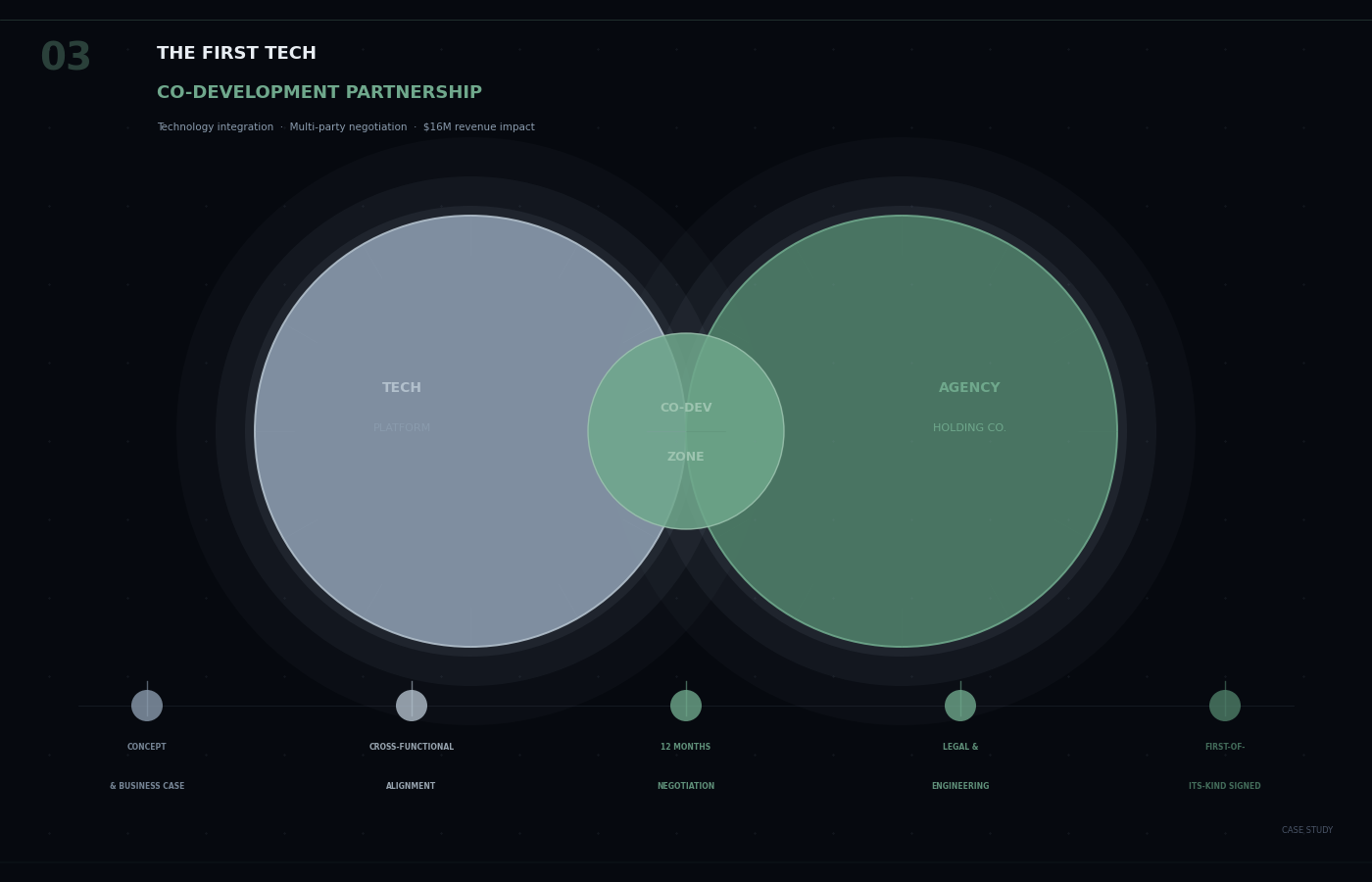
A technology platform and an agency holding company had a strong trading relationship but no technology integration. The opportunity was to create something beyond a deal — a technology partnership that would generate growth for both parties and create genuine competitive differentiation. The challenge: getting legal, engineering, finance, commercial, and agency leadership across multiple global regions to move in the same direction.
Conceptualised the partnership model and built the business case. Spent over a year managing cross-functional workstreams — coordinating stakeholders across four global regions, keeping the initiative alive through multiple rounds of internal and external negotiation, and continuously translating between the priorities of technical, legal, and commercial teams.
A first-of-its-kind technology co-development agreement was signed and delivered. The partnership became an internal reference point for how technology and commercial relationships can be structured together rather than separately.
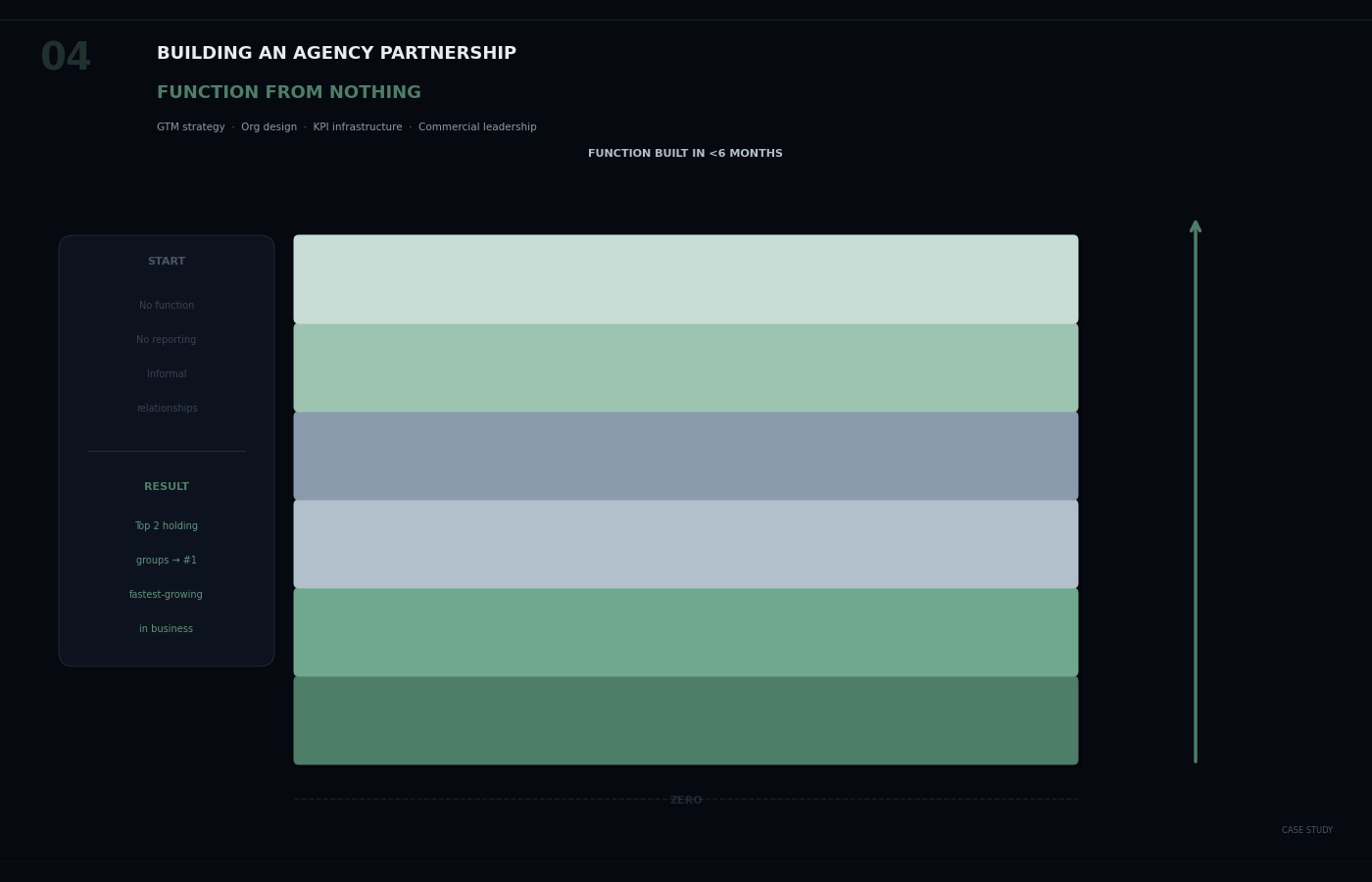
A major technology platform had no structured approach to agency holding company partnerships in a key region. No dedicated function, no reporting, no agency-specific proposition, no commercial targets. The relationship with the largest agencies in the region was informal and inconsistent — significant opportunity being left on the table.
Built the function from scratch: strategy, org design, KPIs, reporting infrastructure, agency insights programme, vertical narratives, and GTM. Worked directly with the largest holding groups in the region. Built a local market coverage model that gave the central team commercial leverage without removing autonomy from individual markets.
Within the first half-year, the two largest holding group relationships became among the highest-growing in the business — outperforming equivalent relationships in other geographies.
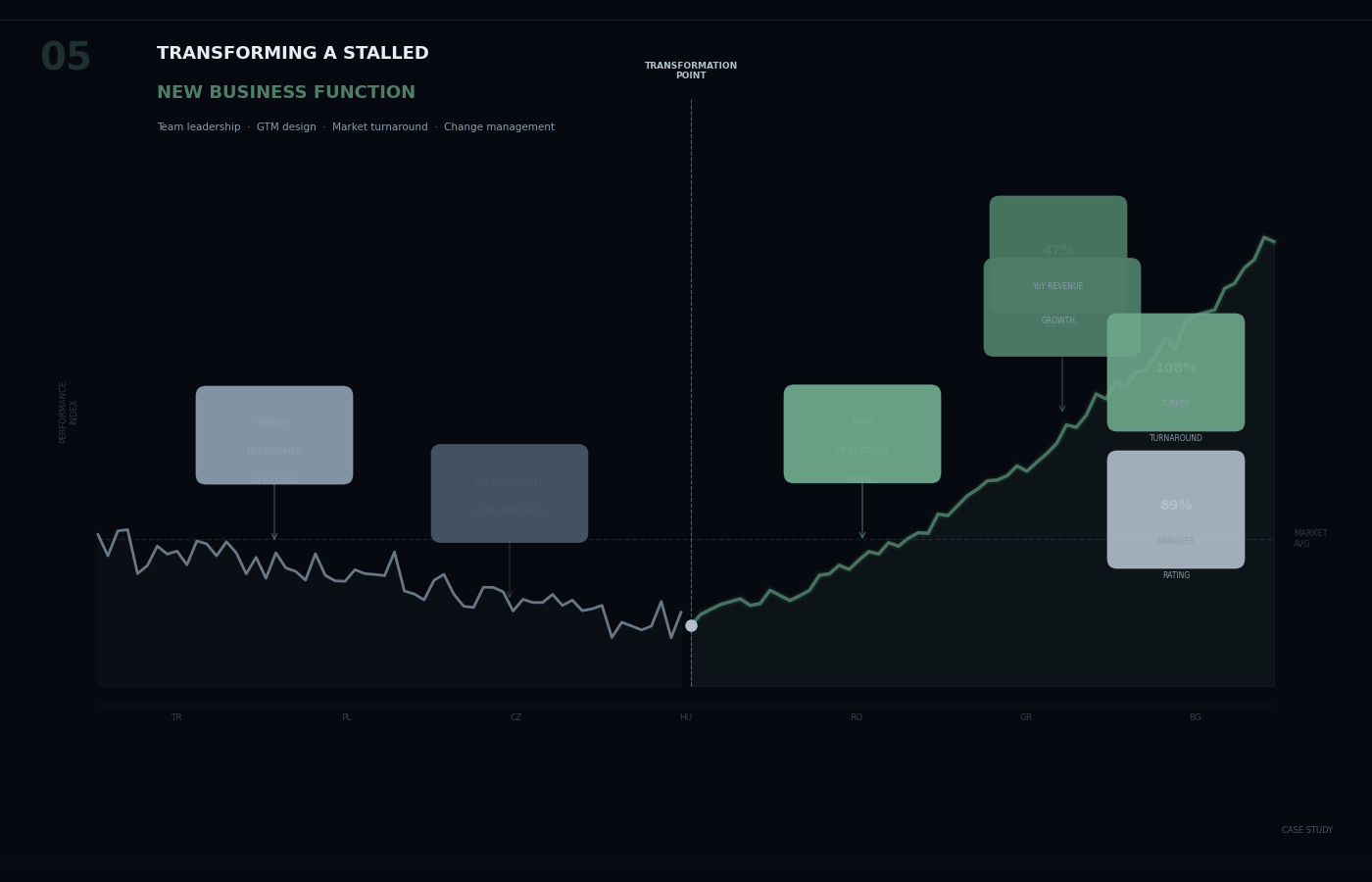
A new business development team spread across multiple international markets with inconsistent performance. One market was the worst performer in the region. The team structure was unclear, the GTM approach was inconsistent, and there was no shared commercial language across markets.
Rebuilt the team structure and introduced a new operational model that aligned marketing, sales, and management around shared goals for the first time. Developed a bespoke full-funnel strategy and pitch approach for each market based on its specific competitive context, rather than applying a single template.
Performance reversed significantly across all markets. The previously worst-performing market became the highest in the region. Team retention improved substantially above the industry average. Manager effectiveness scores rose well above the organisation's benchmark.